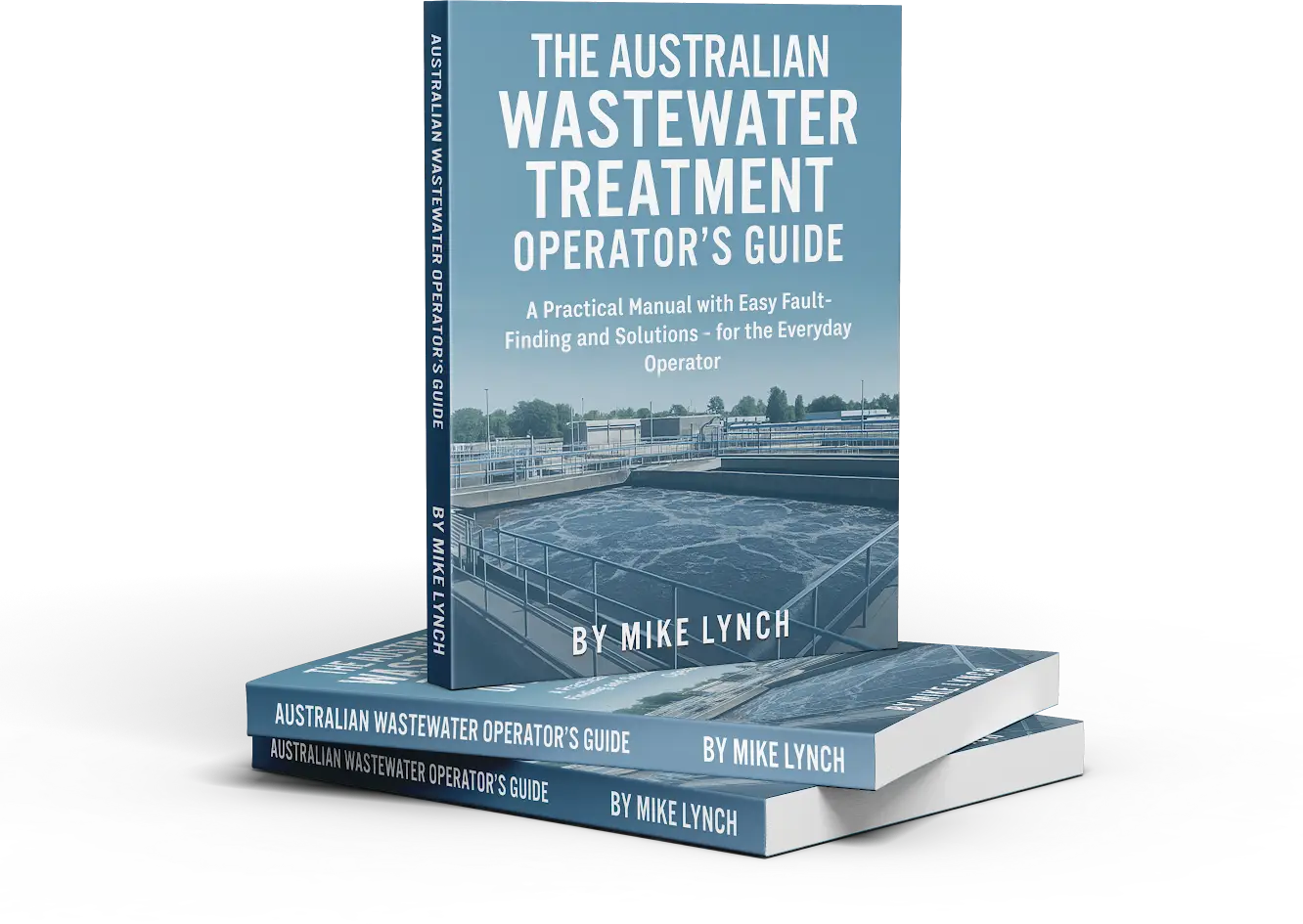
Australian Wastewater Treatment (operator’s) Guide
Practical, field-tested guidance for operating Australian wastewater treatment plants
This guide is written for people who are responsible for keeping wastewater treatment systems running — often with limited resources, ageing infrastructure, and little room for error.
It is not an academic textbook and not a generic overseas manual.
It is a practical reference built around how Australian wastewater plants are actually operated, maintained, and troubleshot in the field.
Why this book exists
Many wastewater operators are expected to manage complex systems using manuals that are either:
- Overly theoretical
- Written for ideal conditions
- Or imported from overseas without regard for Australian standards, climate, or operating realities
This guide exists to close that gap.
It focuses on what operators need to know on site, how systems behave day to day, where problems typically start, and how to respond safely and methodically when things drift outside normal operation, with working examples.
What this guide covers
The book provides clear, practical guidance across a wide range of Australian wastewater treatment systems, including:
- Lagoons and oxidation ponds
- Small community treatment plants
- RBC systems
- Mechanical and packaged treatment works
- Common upstream and downstream operational issues
It places strong emphasis on:
- Routine operation and monitoring
- Recognising early warning signs
- Troubleshooting process and equipment problems
- Operator decision-making under real conditions
- Safe, repeatable operational practices
The focus throughout is on practical application, not theory for theory’s sake.
Who this book is for
This guide is written for:
- Wastewater treatment operators
- Water and wastewater supervisors
- Council operations staff
- Regional and remote system operators
- Operators studying or working under Cert III / Cert IV frameworks
- Experienced operators who want a reliable reference on site
Who this book is not for
This book is not intended for:
- Academic study without operational context
- Detailed engineering design calculations
- Consultancy-level modelling or process optimisation theory
Its purpose is operation, not design sign-off.
How this guide is different
This guide is written by a practitioner who has:
- Operated and troubleshot real wastewater systems
- Supported councils and operational teams
- Worked across the full lifecycle of treatment infrastructure
- Seen what happens when plants are difficult to operate after handover
The content reflects Australian standards, operating conditions, and regulatory expectations, and is structured so it can be used on site, not just read cover to cover.
How operators use this book
Most readers use this guide as:
- A day-to-day reference
- A troubleshooting companion
- A confidence check when systems aren’t behaving as expected
- A training support tool for new or transitioning operators
It is written to be practical, clear, and durable, something you can return to when needed.
Format and availability
- Printed reference manual
- Designed for use in operational environments
- Clear structure for quick consultation
- Australian context throughout
Final note
Wastewater treatment rarely operates under perfect conditions.
This guide is written for those realities — by someone who has worked within them.
If you are responsible for keeping systems compliant, safe, and running day after day, this book is designed to support that responsibility.